SERVICES

ACL Reconstruction Surgery in Singapore

Dr Alan Cheung

Dr Alan Cheung

Senior Consultant Orthopaedic Surgeon in Singapore

MBBS (London), MRCS (England), FRCS (Trauma and Orthopaedics, England), Diploma in Sport and Exercise Medicine (UK), Fellow of the European Board of Orthopaedics and Traumatology, American Academy of Orthopaedic Surgeons (AAOS)

The anterior cruciate ligament (ACL) is one of the most important stabilising structures in the knee and one of the most commonly injured, particularly among athletes and active individuals. Whether the injury occurs on the football pitch, basketball court or during a sudden change of direction in everyday life, a complete ACL tear can cause significant instability, pain and reduced confidence in the knee. When these symptoms affect daily activities or the ability to return to sport, ACL reconstruction may be recommended to restore knee stability and function.

What Is ACL Reconstruction?

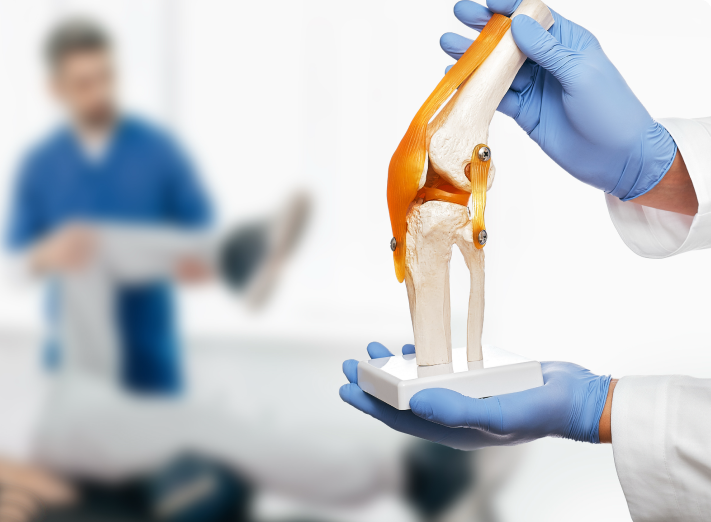
ACL reconstruction is a surgical procedure used to treat an ACL injury by replacing the damaged ACL with a graft, usually sourced from the patient's own hamstring, patellar or quadriceps tendon, or from donor tissue. The goal is to restore knee function, improve stability and help individuals return to daily activities and sport.

Rather than repairing the torn ligament itself, ACL reconstruction creates a new ligament using a tendon graft. This is because the ACL has a limited blood supply and tissue characteristics that make direct repair less reliable in many cases. Over time, the graft undergoes a biological process known as ligamentisation, gradually developing properties similar to those of the original ACL.

What Are The Graft Options For ACL Reconstruction?

One of the key decisions in ACL reconstruction is the choice of tendon graft. The graft serves as the scaffold on which new ligament tissue gradually grows, a process that takes several months. Your ACL surgeon will discuss the most appropriate option based on your age, activity level, prior surgeries and clinical findings.

Hamstring Tendon Autograft

Source: Hamstring tendon from the patient's own knee

Key Advantages: Smaller incision, less front-of-knee pain and established long-term outcomes

Key Considerations: Slightly longer healing time

Patellar Tendon Autograft

Source: Patellar tendon from the patient's own knee

Key Advantages: Strong initial fixation, often chosen for high-demand athletes

Key Considerations: Higher risk of front-of-knee pain and kneeling discomfort

Quadriceps Tendon Autograft

Source: Quadriceps tendon from the patient's own knee

Key Advantages: Larger graft diameter, useful for some revision procedures

Key Considerations: Larger incision with temporary thigh weakness or discomfort

Allograft

Source: Donor tendon

Key Advantages: No tendon harvest, shorter operation

Key Considerations: Higher re-tear risk in younger, active patients

Note: Allografts are generally not recommended for young, athletically active patients due to a higher documented risk of graft failure and re-injury. Your surgeon will discuss the most appropriate choice at your consultation.

ACL reconstruction is primarily used to treat complete or near-complete ACL tears that result in ongoing knee instability or loss of function. These injuries can lead to:

  • Knee instability that causes the knee to give way during physical activity
  • Difficulty performing sports or activities that involve pivoting, jumping or rapid changes in direction
  • Limited range of motion and persistent knee pain
  • Secondary damage to other knee structures, including the meniscus and cartilage, due to ongoing instability

While some ACL injuries can be managed with physiotherapy and activity modification, reconstruction may be considered when instability persists or when the individual wishes to return to activities that place high demands on the knee.

Who Is ACL Reconstruction Suitable For?

ACL reconstruction may be considered for individuals with an ACL injury who experience ongoing knee instability or wish to return to activities that place high demands on the knee. Whether surgery is appropriate depends on several factors, including the extent of the injury, knee stability, activity level, associated injuries, treatment goals and response to non-surgical management.

Not everyone with an ACL injury requires surgery. Depending on the individual circumstances, non-surgical treatment such as physiotherapy, activity modification or bracing may be appropriate. The following table outlines factors that may be considered when determining whether ACL reconstruction is suitable.

Competitive or recreational athletes

Knee instability following an ACL tear, particularly when the individual wishes to return to sports involving cutting, pivoting or jumping

Physically active adults (any age)

Persistent instability or episodes of the knee giving way that continue to limit daily activities or exercise despite appropriate rehabilitation

Individuals with combined knee injuries

An ACL injury accompanied by meniscal, cartilage or other knee injuries that may influence the overall treatment approach

Individuals who have not improved with conservative treatment

Persistent knee instability despite completing an appropriate physiotherapy and rehabilitation programme

Individuals with occupational demands

Knee instability that affects the ability to perform work requiring heavy manual activity or movements that depend on knee stability

To Find Out If ACL Reconstruction May Be Appropriate For You, Contact Us To Arrange An Assessment And Discuss The Most Appropriate Treatment Options.

How Is ACL Reconstruction Performed?

ACL reconstruction is typically performed as an arthroscopic procedure, which is minimally invasive and involves the following steps:

Anaesthesia and Preparation

General or regional anaesthesia is administered before the procedure begins.

Incision and Arthroscopy

Small incisions are made and an arthroscope is inserted into the knee to assess the injury and surrounding structures.

Graft Harvesting

A tendon graft is typically taken from the hamstring or patellar tendon. Where appropriate, a donor tendon may be used instead.

Drilling and Graft Placement

Small tunnels are created in the thigh and shin bones to position the graft in place of the injured ACL.

Fixation

The graft is secured using screws or other fixation devices to provide stability.

Closure and Recovery

The incisions are closed and the knee is bandaged before the patient is transferred to the recovery area.

What Happens Before And After ACL Reconstruction?

Every stage of ACL reconstruction plays a role in achieving a successful outcome. Knowing how to prepare for surgery and recover afterwards can help you feel more confident throughout the treatment journey.

Before Surgery

A thorough physical examination and imaging tests, such as an MRI scan or X-ray, will be conducted to assess the injury. You may undergo prehabilitation (pre-surgery physiotherapy) to strengthen the knee and improve post-operative outcomes. The goal is to restore full range of motion, reduce swelling and strengthen the muscles around the knee before the procedure, which may support post-operative recovery and help prepare the knee for surgery. Your surgeon may recommend a course of prehab before setting a surgery date. Instructions regarding fasting, medications and lifestyle modifications will be provided.

After Surgery

Recovery after ACL reconstruction progresses gradually over several months. The pace of rehabilitation varies depending on factors such as the type of graft used, associated knee injuries, procedures performed at the same time and individual progress. The following timeline provides a general guide. Progression to activities such as running and sport should be based on recovery and functional assessment rather than time alone.

Early Recovery

General Timeline: First few weeks

What to Expect: Rehabilitation focuses on managing pain and swelling, restoring knee movement and gradually improving mobility. Crutches may be used initially and reduced as advised.

Strength and Mobility

General Timeline: Around 1-3 months

What to Expect: Physiotherapy progresses to strengthening, balance and movement exercises as knee function improves.

Return to running

General Timeline: Around 3 months onwards

What to Expect: Running may be introduced when appropriate strength, movement and knee control have been regained.

Sport-Specific Training

General Timeline: Around 6 months onwards

What to Expect: Sport-specific exercises and non-contact training may be introduced as strength, stability and confidence improve.

Return to Sport

General Timeline: Often 9–12 months or longer

What to Expect: Return to competitive or pivoting sports is considered after assessment of strength, function, knee stability and readiness to return.

Recovery varies between individuals, and these timeframes should not be treated as fixed milestones. Your surgeon and physiotherapist will guide your progression based on your recovery and activity goals.

What Are The Risks And Complications Of ACL Reconstruction?

As with any surgery, ACL reconstruction carries potential risks and complications. These may include infection, blood clots, knee stiffness, persistent pain or swelling, injury to nearby nerves or blood vessels, and graft failure or re-injury. In some cases, further treatment or surgery may be required.

Your orthopaedic surgeon will discuss these risks with you and advise on measures that may help reduce complications based on your individual circumstances.

Rebuilding Strength And Stability After An ACL Tear With Dr Alan Cheung

An ACL injury does not have to mean giving up the activities you enjoy. With appropriate treatment and rehabilitation, ACL reconstruction can restore knee stability, improve function and support a safe return to daily life and sport. The most suitable treatment depends on your injury, activity level and goals.

At International Orthopaedic Clinic, patients receive comprehensive assessment and personalised treatment for ACL injuries, including ACL reconstruction surgery tailored to each patient's needs. Dr Alan Cheung will recommend the most appropriate treatment based on your condition and recovery goals.

If you have sustained an ACL injury or are experiencing ongoing knee instability, contact us to arrange a consultation and discuss the most appropriate treatment options.

START YOUR CARE JOURNEY
Contact Us Today

For more information about our services, or to make an appointment, please reach out to us. We will get back to you as soon as possible.

Whatsapp us
+65 8828 7111

FAQs About ACL Reconstruction Surgery

The procedure usually lasts between 60–90 minutes, but total hospital time, including pre-operative and post-operative care, may be several hours.

Dr Alan Cheung

Senior Consultant Orthopaedic Surgeon

MBBS (London)
MRCS (Royal College of Surgeons of England)
FRCS (Trauma and Orthopaedics)
Diploma in Sport and Exercise Medicine
(Faculty of Sport and Exercise Medicine UK)

Dr Alan Cheung is a Senior Consultant Orthopaedic Surgeon with a keen focus on treating sports injuries, adult joint reconstruction and robotic surgery (Makoplasty, Navio & Robodoc). As an avid sportsperson who is actively involved in the sporting scene, Dr Cheung empathises deeply with the needs of athletes. As a trusted orthopaedic specialist, Dr Cheung has published in numerous peer-reviewed journals and has presented at various international conferences.

  • Fellowship in Joint Reconstruction & Musculoskeletal Oncology
  • Fellowship of the European Board of Orthopaedics & Traumatology
  • Asia Pacific Knee Arthroscopy and Sports Medicine Society
  • American Academy of Orthopaedic Surgeons (AAOS)
Our Clinics

Mt Elizabeth Novena #05-24, 38 Irrawaddy Road, Singapore 329563

View on Google Maps

Farrer Park Hospital Connexion, #08-20, 1 Farrer Park Station Road, Singapore 217562

View on Google Maps

Operating Hours

Monday to Friday : 9 am to 5pm
Saturday : 9 am to 1pm
Sunday & Public Holidays : Closed

Services
  • Sports Injuries
  • Orthopaedic Trauma
  • Knee
  • Hip
  • Shoulder
  • Foot And Ankle