


BLOG

When Is It Better to Wait Before Hip Replacement Surgery?

Dr Alan Cheung

Dr Alan Cheung

Senior Consultant Orthopaedic Surgeon in Singapore

MBBS (London), MRCS (England), FRCS (Trauma and Orthopaedics, England), Diploma in Sport and Exercise Medicine (UK), Fellow of the European Board of Orthopaedics and Traumatology, American Academy of Orthopaedic Surgeons (AAOS)

Man with hip problems.

Being told you may eventually need hip replacement surgery does not always mean it is the right time to have it. While some people benefit from early surgical intervention, others can continue managing their symptoms with conservative treatment before surgery becomes necessary.

The decision is not simply about how much pain you have or what your X-rays show. Orthopaedic specialists also consider how your hip is functioning, how your symptoms affect your daily life and whether waiting is likely to maintain your quality of life or gradually reduce it. Understanding when it is reasonable to wait—and when it may no longer be beneficial—can help you make a more informed decision about treatment.

Key Takeaways

  • Hip replacement surgery is not always needed immediately after a diagnosis of hip arthritis.
  • Waiting may be appropriate if your symptoms are manageable and conservative treatment continues to support your mobility, independence and quality of life.
  • As your symptoms change over time, regular reassessment helps determine whether your current treatment remains the most appropriate approach.
  • Delaying surgery for too long may affect muscle strength, mobility and recovery if hip function continues to decline.
  • The right timing for surgery is based on your symptoms, hip function, lifestyle and treatment goals rather than age, X-ray findings or pain alone.

When Is It Reasonable to Wait Before Hip Replacement Surgery?

Hip replacement surgery is rarely an emergency. For many people, there is a period where symptoms can be managed with conservative treatment while the hip continues to function well enough for everyday life. During this time, waiting may be a reasonable approach if it allows you to maintain your mobility, independence and quality of life.

It may be appropriate to continue with non-surgical treatment if:

  • Your symptoms are mild or occur only occasionally, rather than affecting you every day.
  • Everyday activities remain manageable, even if certain movements cause some discomfort.
  • Physiotherapy, exercise or medication are helping, allowing you to stay active and maintain hip function.
  • Your hip movement is largely preserved, without significant stiffness limiting daily activities.
  • Your symptoms are stable, rather than progressively worsening over time.

Choosing to wait does not mean ignoring your symptoms. Instead, it allows you and your orthopaedic specialist to monitor how your hip changes over time while continuing treatments that may help maintain function. Regular follow-up allows your treatment plan to be adjusted if your condition changes over time.

How Do You Know When Waiting Is No Longer Helping?

For many people, the decision to proceed with hip replacement surgery is not triggered by one dramatic event. Instead, it often becomes clear through small changes that gradually affect everyday life. Activities that once felt manageable become more difficult, and you may find yourself adapting your routine without even realising it.

Signs that it may be time to discuss your treatment plan again include:

  • You are walking shorter distances, not because you want to, but because your hip becomes painful or stiff.
  • You are avoiding activities you previously enjoyed, such as travelling, exercising or social outings.
  • Simple daily tasks require more effort, including getting in and out of a car, climbing stairs or putting on shoes.
  • Pain or stiffness is affecting your sleep, making it harder to rest comfortably at night.
  • You are relying more frequently on pain medication just to get through everyday activities.
  • Family or friends notice changes in the way you move, even before you do.

These changes do not automatically mean surgery is necessary, but they may suggest that your current treatment is no longer providing the same level of benefit. Reassessment by an orthopaedic specialist can help determine whether continuing to wait remains the best approach or whether a different treatment plan is likely to improve your quality of life.

Does Waiting Too Long Affect Surgery or Recovery?

Choosing to delay hip replacement surgery does not automatically lead to poorer outcomes. However, if hip function continues to decline over a prolonged period, it may affect your overall mobility and make recovery more challenging than it might have been earlier.

Waiting too long may contribute to:

  • Reduced muscle strength, as decreased activity can weaken the muscles that support the hip.
  • Increasing joint stiffness, making everyday movements progressively more difficult.
  • Changes in the way you walk, which may place additional strain on the lower back, opposite hip or knees.
  • Reduced overall fitness, which can influence rehabilitation after surgery.
  • Progressive joint stiffness, which may make rehabilitation and regaining movement more challenging.
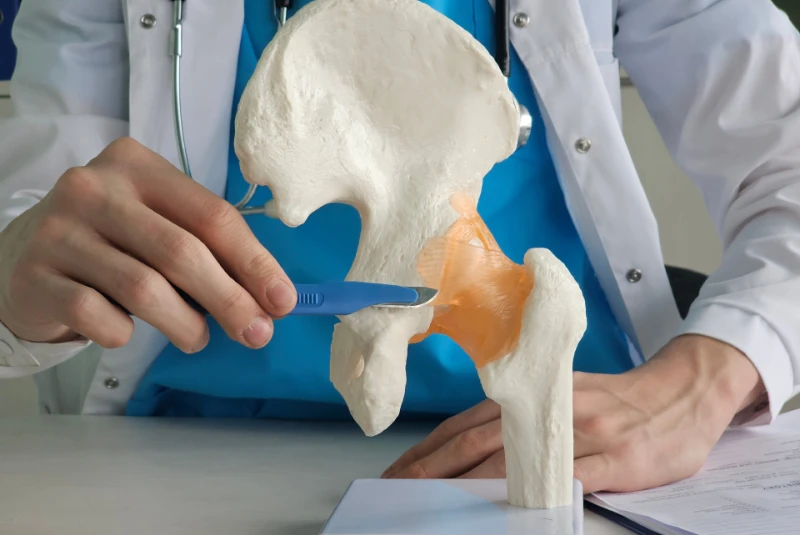
Doctor pointing to a model of the hip.

This does not mean surgery should be performed as early as possible. Rather, it highlights the importance of reviewing your symptoms regularly. The goal is to choose a time when conservative treatment is no longer providing enough benefit, but before prolonged loss of mobility begins to significantly affect your function and recovery potential.

How Do Specialists Decide When the Time Is Right?

There is no single age, X-ray finding or pain score that determines when hip replacement surgery is appropriate. Instead, orthopaedic specialists consider the overall picture, balancing your symptoms, hip function and treatment goals to recommend the most suitable timing for surgery.

During your assessment, your specialist may consider:

Your symptoms

Evaluates how pain, stiffness and reduced mobility affect your daily life.

Hip function

Assesses how well you can walk, climb stairs and carry out everyday activities.

Response to conservative treatment

Determines whether physiotherapy, medication or other non-surgical treatments continue to provide meaningful benefit.

Imaging findings

Confirms the extent of joint degeneration and whether it corresponds with your symptoms.

Your lifestyle and goals

Considers the activities you hope to return to and the level of function you would like to achieve after treatment.

Your overall health

Helps determine whether you are medically ready for surgery and supports <a href='/blog/hip-arthroscopy-vs-hip-replacement/' class='underline inline'>appropriate surgical planning</a>.

The decision to proceed with surgery is based on more than the condition of the hip itself. By considering all of these factors together, your orthopaedic specialist can recommend the timing most likely to provide meaningful long-term improvement.

Decide on the Right Time for a Hip Replacement with Dr Alan Cheung

The right time for hip replacement surgery is different for every patient. Understanding how your symptoms are changing over time is an important step towards deciding when surgery may offer greater improvements in mobility and quality of life.

At International Orthopaedic Clinic, we provide comprehensive assessment and treatment for hip conditions, helping patients understand when conservative treatment remains appropriate and when surgery is likely to offer greater long-term benefit. Led by Dr Alan Cheung , our team takes a thorough, evidence-based approach to assessing hip function, monitoring how symptoms change over time and recommending hip replacement surgery only when it is likely to provide meaningful improvements in mobility, independence and quality of life. Every treatment plan is tailored to your symptoms, lifestyle and treatment goals.

If hip pain or stiffness is beginning to limit the way you live, arrange a consultation with us to discuss your symptoms and whether it may be the right time to consider hip replacement surgery.

FAQs About Delaying Hip Replacement Surgery

There is no ideal age for hip replacement surgery. The decision is based on your symptoms, hip function, overall health and quality of life rather than age alone. Many people benefit from surgery both before and after retirement age, depending on their individual circumstances.

Our Orthopaedic Specialist in Singapore

Dr Alan Cheung

Senior Consultant Orthopaedic Surgeon

MBBS (London)
MRCS (Royal College of Surgeons of England)
FRCS (Trauma and Orthopaedics)
Diploma in Sport and Exercise Medicine
(Faculty of Sport and Exercise Medicine UK)

Dr Alan Cheung is a Senior Consultant Orthopaedic Surgeon with a keen focus on treating sports injuries, adult joint reconstruction and robotic surgery (Makoplasty, Navio & Robodoc). As an avid sportsperson who is actively involved in the sporting scene, Dr Cheung empathises deeply with the needs of athletes. As a trusted orthopaedic specialist, Dr Cheung has published in numerous peer-reviewed journals and has presented at various international conferences.

  • Fellowship in Joint Reconstruction & Musculoskeletal Oncology
  • Fellowship of the European Board of Orthopaedics & Traumatology
  • Asia Pacific Knee Arthroscopy and Sports Medicine Society
  • American Academy of Orthopaedic Surgeons (AAOS)
Our Clinics

Mt Elizabeth Novena #05-24, 38 Irrawaddy Road, Singapore 329563

View on Google Maps

Farrer Park Hospital Connexion, #08-20, 1 Farrer Park Station Road, Singapore 217562

View on Google Maps

Operating Hours

Monday to Friday : 9 am to 5pm
Saturday : 9 am to 1pm
Sunday & Public Holidays : Closed

Services
  • Sports Injuries
  • Orthopaedic Trauma
  • Knee
  • Hip
  • Shoulder
  • Foot And Ankle