

A Guide to Unicompartmental vs. Total Knee Replacements

Dr Alan Cheung
Senior Consultant Orthopaedic Surgeon in Singapore
MBBS (London), MRCS (England), FRCS (Trauma and Orthopaedics, England), Diploma in Sport and Exercise Medicine (UK), Fellow of the European Board of Orthopaedics and Traumatology, American Academy of Orthopaedic Surgeons (AAOS)
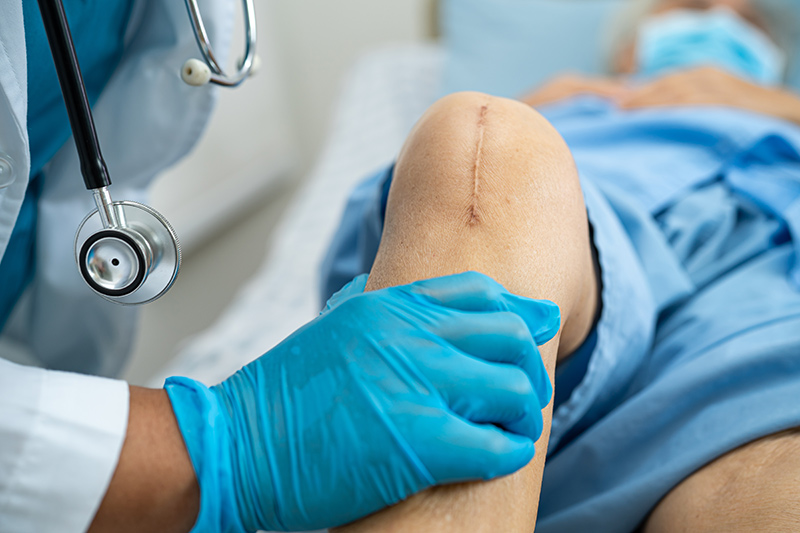
For many patients in Singapore dealing with chronic joint pain, the assumption is that surgery always means a full knee replacement. However, modern orthopaedic surgery has evolved rapidly, now offering more targeted solutions known as the unicompartmental or partial knee replacement. This procedure focuses on resurfacing only the specific area of decay, allowing you to preserve healthy bone and the natural ligaments that provide joint stability.
However, the core dilemma faced is determining when it is better to preserve your natural anatomy versus opting for a total knee replacement. While a complete resurfacing is the definitive solution for widespread joint damage, a partial replacement offers a faster recovery and a more natural feel for those with localised wear. Ultimately, understanding the mechanical and functional differences between these two surgeries is essential for making an informed choice that aligns with your specific level of joint degeneration.
Understanding the Anatomy of Knee Decay
To determine which procedure is right for you, it is helpful to view the knee not as a single unit, but as a structure composed of three distinct compartments. In fact, a knee replacement is rarely a binary choice; rather, it is a clinical decision based on precisely where your cartilage has worn down.
The Three Compartments of the Knee
The knee joint is divided into the following sections:
- Medial Compartment: The inner side of the knee.
- Lateral Compartment: The outer side of the knee.
- Patellofemoral Compartment: The area behind the kneecap.
Localised vs. Generalised Osteoarthritis
The spread of cartilage damage is the primary factor that dictates your surgical path. If your joint decay is confined to just one of these three compartments—most commonly the medial side—you may be an ideal candidate for a unicompartmental replacement. However, if the osteoarthritis has spread to two or more compartments, a total knee replacement becomes necessary to ensure the entire joint remains stable and pain-free.
Preserving the Kinetic Chain
A major advantage of addressing localised decay with a partial procedure is the preservation of your natural ligaments, specifically the ACL and PCL. By keeping these stabilisers intact, the integrity of your kinetic chain remains closer to its original state. This results in a more natural feeling during movement and a more fluid walking gait compared to a full knee replacement surgery, where these ligaments are typically removed to accommodate the prosthetic.
Total Knee Replacement: The Gold Standard for Absolute Care
While modern orthopaedics emphasises bone preservation, total knee replacement surgery remains the ideal solution for patients facing advanced joint failure. It is considered the gold standard because it provides a predictable, long-term fix for widespread degeneration that alternative treatments simply cannot address.
When It Is Necessary
A full replacement becomes necessary when osteoarthritis is no longer localised to a single area. If your diagnostic scans show bone-on-bone friction affecting two or more compartments of the knee, a partial procedure will not provide lasting relief. In these cases, a total knee replacement is required to fully eliminate pain and prevent the remaining natural cartilage from collapsing further.
The Procedure: Restoring Stability
During the surgery, the damaged surfaces of the femur (thigh bone) and tibia (shin bone) are entirely resurfaced. Your surgeon replaces these worn areas with durable metal and medical-grade plastic components. This comprehensive overhaul allows for the correction of severe deformities, such as bow-legged or knock-kneed alignments, which are often the result of years of chronic joint instability.
Longevity and Reliability in Singapore
For many patients, the primary appeal of a full knee replacement surgery is its remarkable track record. It remains the most predictable outcome for patients with advanced joint degeneration because it addresses the entire joint environment at once. With the advanced materials used in Singapore today, these replacements are also built for extreme durability, offering decades of pain-free movement and a high level of reliability for those looking to return to a full, active lifestyle.
Unicompartmental Knee Replacement: The Precision Alternative
For patients with damage isolated to a single area, a unicompartmental knee replacement offers a more conservative and tailored surgical solution. Instead of a total joint overhaul, this procedure focuses on precision and the maximum preservation of your natural anatomy.
The Targeted Approach
Think of this procedure as repairing only the damaged room of a house rather than rebuilding the entire structure. By replacing only the specific compartment affected by knee arthritis, your surgeon can leave healthy bone and cartilage completely intact. This localised approach is ideal for maintaining as much of your original knee as possible.
Clinical Advantages
Because the surgery is less invasive than a full knee replacement surgery, it offers several immediate clinical benefits:
- Smaller Incisions: Less disruption to the surrounding soft tissue.
- Reduced Blood Loss: A more controlled surgical environment.
- Ligament Preservation: The biggest clinical win is keeping your natural cruciate ligaments, which are essential for joint stability and control.
The Natural Feel Factor
Active patients often prefer this method because of superior proprioception, or joint awareness. Because your natural ligaments remain in place, your brain receives more accurate feedback regarding the knee's position during movement. This results in a joint that feels less like a prosthetic and more like your own, allowing for a more confident return to sports and physical hobbies compared to a total knee replacement.
Comparing the Recovery Roadmaps
While both procedures aim to restore function, the speed and structure of your rehabilitation will differ based on the extent of the surgery performed. Here's what to keep in mind:
- Timeline Differences: Patients undergoing a partial replacement often experience 24-hour mobilisation and can sometimes return home the same day, whereas total knee replacement protocols typically involve a few days of hospital stay to manage a more structured initial recovery phase.
- Functional Milestones: You can generally expect a quicker return to professional duties and driving—often within two to four weeks—with a partial replacement, though both surgeries eventually allow for a successful return to low-impact sports like cycling or golf.
- The Role of Technology: Modern robotic-assisted surgery is significantly closing the gap in recovery times for both procedures by enhancing surgical precision, which minimises soft tissue trauma and ensures the new components are aligned perfectly with your skeletal structure.

Reclaim Your Lifestyle with International Orthopaedic Clinic
Choosing between a unicompartmental and a total knee replacement is a decision that impacts your long-term mobility and quality of life. Whether you are a candidate for the bone-preserving precision of a partial replacement or require the comprehensive stability of a total knee replacement surgery, the goal remains the same: returning to a life free from the constraints of chronic joint pain.
At International Orthopaedic Clinic, Dr Alan Cheung and his team utilise advanced robotic-assisted technology to ensure every procedure is tailored to your unique anatomy. By combining surgical expertise with a focus on fast-track recovery, we help you protect your kinetic chain and regain the confidence to pursue your favourite activities.
Don't let advanced osteoarthritis dictate your daily routine. Book an appointment with our clinic today to discuss your options and take the first step toward a more active future.
Frequently Asked Questions About Knee Replacement Surgery
Can a partial knee replacement be converted to a total knee replacement later on?
A unicompartmental implant can be converted to a total knee replacement if arthritis eventually spreads to the other compartments of your joint. This revision process allows your surgeon to remove the partial prosthetic and resurface the entire joint, ensuring long-term stability and pain relief even as your natural bone ages.
How does a partial knee replacement feel compared to a full knee replacement?
Many patients find that a partial replacement feels more natural because it preserves the ACL and PCL, which are often removed during a full knee replacement surgery. This preservation maintains your proprioception—the subconscious ability to feel the joint's position—resulting in a more fluid walking gait and better performance during daily physical activities.
What is the typical lifespan of a modern knee implant in Singapore?
With the integration of robotic-assisted technology and highly durable medical-grade materials, a modern knee replacement is now expected to last between 20 and 25 years. You can maximise this lifespan by maintaining a healthy weight and prioritising low-impact exercises like cycling or swimming, which protect the prosthetic components from unnecessary mechanical wear.
