


BLOG

Why Does Hip Stiffness Sometimes Matter More Than Hip Pain?

Dr Alan Cheung

Dr Alan Cheung

Senior Consultant Orthopaedic Surgeon in Singapore

MBBS (London), MRCS (England), FRCS (Trauma and Orthopaedics, England), Diploma in Sport and Exercise Medicine (UK), Fellow of the European Board of Orthopaedics and Traumatology, American Academy of Orthopaedic Surgeons (AAOS)

Lady with hip troubles.

Hip pain is often the symptom that prompts people to seek medical attention, but it is not always the most important indicator of how much a hip condition is affecting daily life. For some people, the biggest challenge is not the pain itself but the gradual loss of movement that makes everyday activities increasingly difficult.

Even when pain is relatively manageable, reduced hip movement can have a much greater impact on mobility and independence than many people realise. Understanding how stiffness affects hip function helps explain why treatment decisions, including hip replacement surgery, are based on more than pain alone.

Hip Pain vs. Hip Stiffness: What's the Difference?

Although hip pain and hip stiffness often occur together, they do not always affect people in the same way. Some people experience significant pain while maintaining relatively good movement, whereas others find that stiffness has a much greater impact on their ability to carry out everyday activities. Recognising these differences helps explain why stiffness is often just as important as pain when assessing overall hip function.

Hip Pain

Usually causes discomfort during movement or after activity.

Hip Stiffness

Restricts how far or how easily the hip can move.

Hip Pain

May fluctuate depending on activity levels or inflammation.

Hip Stiffness

Often becomes more noticeable over time as joint movement gradually decreases.

Hip Pain

Can make activities uncomfortable.

Hip Stiffness

Can make activities physically difficult, even if pain is relatively mild.

Hip Pain

Often improves temporarily with pain relief or rest.

Hip Stiffness

May persist despite symptom relief because the joint itself has become less mobile.

Hip Pain

Primarily affects how the hip feels.

Hip Stiffness

Primarily affects what the hip can do.

Hip pain and stiffness can also affect the surrounding muscles differently. Pain often leads people to reduce activity temporarily, while prolonged stiffness can cause the muscles around the hip, buttock and thigh to become tighter or weaker as they compensate for the restricted joint. Over time, these changes may reduce overall hip function and make movement feel increasingly restricted.

How Does Hip Stiffness Affect Everyday Life?

Unlike pain, which may come and go, hip stiffness often becomes noticeable through the activities you gradually find yourself avoiding or modifying. Many people adapt so gradually without realising how much hip movement they have lost.

You may notice hip stiffness affecting your ability to:

  • Put on socks or shoes, particularly when bending to reach your feet.
  • Get in and out of a car, where turning your leg becomes more difficult.
  • Climb stairs, especially when the hip feels tight after sitting for a while.
  • Cross your legs, because the hip no longer moves through its full range.
  • Walk longer distances, as the hip becomes increasingly stiff or fatigued with continued movement.
  • Stand up from a low chair, requiring more effort or support than before.

As movement becomes more restricted, the body often begins to compensate. You may rely more heavily on your opposite leg or lower back to complete everyday movements, increasing the workload on other joints and muscles over time.

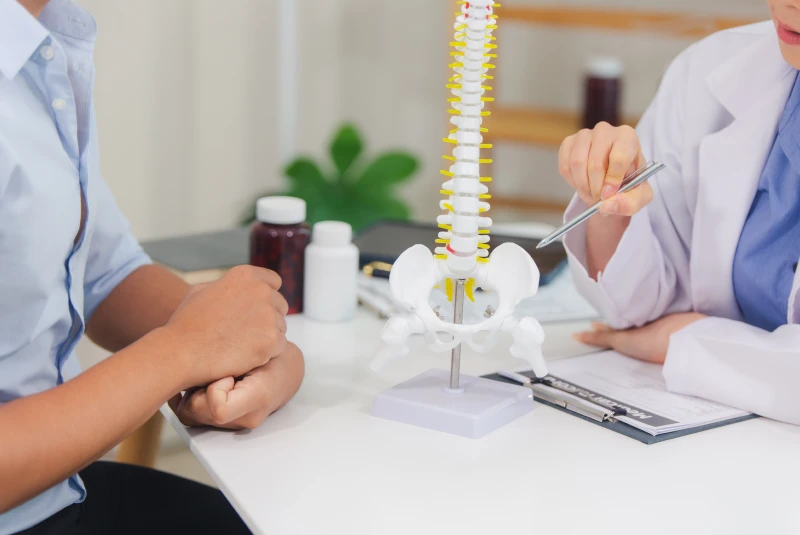
Doctor showing a patient a model of the spine, pointing to the hip.

Can Hip Stiffness Be Treated Without Surgery?

Treatment for hip stiffness depends on its underlying cause and how much it limits your movement and everyday activities. In the earlier stages of joint degeneration, non-surgical treatment may help reduce symptoms, improve mobility and maintain hip function.

Your orthopaedic specialist may recommend one or more of the following treatments:

  • Physiotherapy, to improve joint mobility, strengthen the muscles around the hip and support better movement patterns.
  • Activity modification, by reducing movements that aggravate symptoms while encouraging appropriate low-impact exercise.
  • Pain relief or anti-inflammatory medication, where suitable, to help manage discomfort during daily activities.
  • Walking aids or other supportive devices, if needed, to reduce stress on the affected hip during movement.
  • Image-guided injections, in selected patients, to help relieve pain and improve function for a period of time.

While these treatments may help improve symptoms and maintain mobility, they cannot reverse advanced joint degeneration or restore damaged cartilage. If stiffness continues to limit your movement despite appropriate conservative treatment, your orthopaedic specialist may discuss whether hip replacement surgery is likely to provide greater improvements in mobility, independence and overall quality of life.

When Is Hip Replacement Surgery Considered?

Deciding whether to proceed with hip replacement surgery involves more than assessing how painful the hip feels. Orthopaedic surgeons also consider how much movement has been lost, whether hip stiffness is limiting everyday activities and how well non-surgical treatments continue to manage your symptoms.

Hip replacement may be considered if:

Hip stiffness significantly limits everyday activities

Difficulty with tasks such as walking, climbing stairs or getting in and out of a car may indicate that the hip is no longer functioning well.

Pain and stiffness persist despite conservative treatment

Symptoms continue to affect daily life despite physiotherapy, medication or other non-surgical measures.

Hip mobility continues to decline

Progressive loss of movement can reduce independence and alter the way you move.

Imaging confirms advanced joint damage

X-rays and other imaging help determine whether the degree of joint degeneration matches your symptoms.

Your quality of life is affected

The decision to proceed with surgery considers how your symptoms impact your ability to work, exercise and perform everyday activities.

The aim of hip replacement surgery is not simply to relieve pain but to restore smoother movement and improve overall function. By replacing the damaged joint surfaces, surgery can help patients regain mobility, increase independence and return more comfortably to many of the everyday activities that have become difficult because of hip stiffness.

Move Your Hips More Comfortably with Dr Alan Cheung

Hip stiffness is more than a loss of flexibility. It can gradually affect the way you move, reduce your independence and make everyday activities increasingly difficult. Identifying the cause of stiffness is an important step towards choosing the most appropriate treatment.

At International Orthopaedic Clinic, we provide comprehensive assessment and treatment for hip conditions, including osteoarthritis and other causes of persistent hip pain and stiffness. Led by Dr Alan Cheung, our team takes a thorough, evidence-based approach to assessing hip function, understanding the underlying cause of your symptoms and recommending the most appropriate treatment to restore movement and improve long-term mobility. Every treatment plan is tailored to your symptoms, lifestyle and treatment goals.

If hip stiffness or pain is making everyday activities increasingly difficult, arrange a consultation with us to discuss your symptoms and the treatment options available.

FAQs About Hip Stiffness

No. While osteoarthritis is one of the most common causes of hip stiffness, other conditions such as hip impingement, inflammatory arthritis, previous injuries or muscle and tendon problems can also restrict hip movement. A specialist assessment can help identify the underlying cause.

Meet Our Hip Specialist in Singapore

Dr Alan Cheung

Senior Consultant Orthopaedic Surgeon

MBBS (London)
MRCS (Royal College of Surgeons of England)
FRCS (Trauma and Orthopaedics)
Diploma in Sport and Exercise Medicine
(Faculty of Sport and Exercise Medicine UK)

Dr Alan Cheung is a Senior Consultant Orthopaedic Surgeon with a keen focus on treating sports injuries, adult joint reconstruction and robotic surgery (Makoplasty, Navio & Robodoc). As an avid sportsperson who is actively involved in the sporting scene, Dr Cheung empathises deeply with the needs of athletes. As a trusted orthopaedic specialist, Dr Cheung has published in numerous peer-reviewed journals and has presented at various international conferences.

  • Fellowship in Joint Reconstruction & Musculoskeletal Oncology
  • Fellowship of the European Board of Orthopaedics & Traumatology
  • Asia Pacific Knee Arthroscopy and Sports Medicine Society
  • American Academy of Orthopaedic Surgeons (AAOS)
Our Clinics

Mt Elizabeth Novena #05-24, 38 Irrawaddy Road, Singapore 329563

View on Google Maps

Farrer Park Hospital Connexion, #08-20, 1 Farrer Park Station Road, Singapore 217562

View on Google Maps

Operating Hours

Monday to Friday : 9 am to 5pm
Saturday : 9 am to 1pm
Sunday & Public Holidays : Closed

Services
  • Sports Injuries
  • Orthopaedic Trauma
  • Knee
  • Hip
  • Shoulder
  • Foot And Ankle