


BLOG

Why Do Some ACL Injuries Cause More Knee Instability Than Others?

Dr Alan Cheung

Dr Alan Cheung

Senior Consultant Orthopaedic Surgeon in Singapore

MBBS (London), MRCS (England), FRCS (Trauma and Orthopaedics, England), Diploma in Sport and Exercise Medicine (UK), Fellow of the European Board of Orthopaedics and Traumatology, American Academy of Orthopaedic Surgeons (AAOS)

Young woman with knee pain.

An ACL injury does not affect everyone in the same way. While some people experience immediate knee instability that makes walking or changing direction difficult, others are able to continue with daily activities despite having a significant tear.

This difference is because knee stability depends on more than the ACL alone. Several factors influence how stable the knee feels after an injury, which is why ACL injury treatment is tailored to each individual rather than based on the injury alone.

Why Doesn't Every ACL Injury Feel the Same?

Although two people may both have an ACL injury, they can experience very different symptoms. Some notice immediate instability, while others continue walking or carrying out everyday activities with relatively little difficulty.

Several factors influence how an ACL injury feels:

  • Severity of the Injury: A partial ACL tear may still provide some support to the knee, while a complete tear is more likely to result in significant instability. However, the extent of the tear alone does not always determine how unstable the knee feels.
  • Associated Knee Injuries: ACL injuries often occur alongside damage to the meniscus, cartilage or other ligaments. These associated injuries can contribute to pain, swelling and reduced knee stability.
  • Muscle Strength and Control: The muscles surrounding the knee play an important role in supporting the joint. People with better muscle strength and neuromuscular control may compensate more effectively for an ACL injury, reducing the sensation of instability during everyday activities.
  • Activity Level: People who regularly participate in pivoting or contact sports often notice instability more than those with lower physical demands because these activities place greater stress on the injured knee.

Understanding these differences helps explain why treatment is tailored to each individual rather than based on the injury alone.

How Do ACL Injuries Affect Knee Stability?

The ACL helps prevent the shin bone (tibia) from moving too far forwards relative to the thigh bone (femur) while also controlling rotational movements of the knee. When the ligament is torn, the knee becomes less stable during movements that place greater demands on the joint. Rather than feeling unstable all the time, many people only notice episodes where the knee feels as though it may "give way" during certain activities.

A feeling of instability may become more noticeable when:

  • Pivoting or changing direction quickly, such as during football, basketball or tennis.
  • Walking on uneven ground, where the knee has to respond to changes in balance.
  • Going up or down stairs, particularly if the surrounding muscles are weak.
  • Getting in and out of a car or changing direction suddenly, when the knee may feel less secure.

Repeated episodes of the knee giving way may increase the risk of additional injuries to structures such as the meniscus or cartilage. Recognising these symptoms early is important so that appropriate treatment can be started.

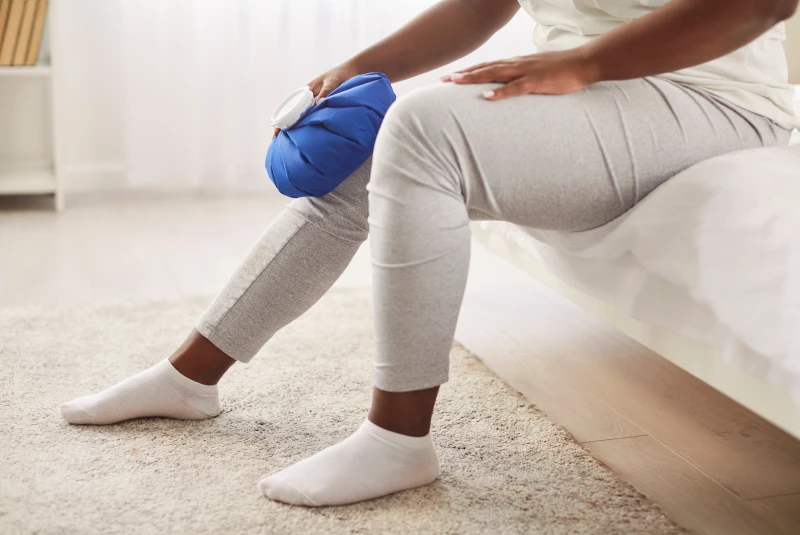
Person icing knee following injury.

What Should You Do After an ACL Injury?

If your knee feels unstable after an ACL injury, it is important to avoid activities that place additional stress on the joint until it has been properly assessed. Continuing to play sport or repeatedly testing whether the knee is "back to normal" may increase the risk of further injury, particularly if the joint remains unstable.

In the meantime, you can take several steps to help manage your symptoms:

  • Rest from activities that trigger pain or instability, especially those involving pivoting, twisting or jumping.
  • Apply ice for 15 to 20 minutes at a time to help reduce pain and swelling, particularly during the first 48 hours after the injury.
  • Use compression and elevate the leg, if swelling is present, to help manage inflammation.
  • Avoid returning to sport too soon, even if the pain has started to improve, as the knee may still lack the stability needed for higher-demand activities.
  • Monitor your symptoms, including whether the knee repeatedly gives way, swells after activity or becomes increasingly difficult to trust during movement.

These measures may help manage symptoms in the short term, but they cannot determine the severity of the injury or whether the ACL has been torn. If instability persists or your symptoms do not improve, an assessment by an orthopaedic specialist can help confirm the diagnosis and guide appropriate treatment.

How Do Specialists Decide Between Surgical and Non-Surgical Treatment?

Not every ACL injury requires surgery. The most appropriate treatment depends on several factors, including the severity of the injury, how stable the knee remains during daily activities, your activity goals and whether other structures within the knee have also been damaged.

While rehabilitation can help many people regain strength and improve knee function, surgery may be recommended for others to restore stability and reduce the risk of further injury.

Non-surgical treatment may be appropriate if...

The knee remains stable during everyday activities.

Surgery may be recommended if...

The knee repeatedly gives way despite rehabilitation.

Non-surgical treatment may be appropriate if...

The ACL injury is partial or symptoms are mild.

Surgery may be recommended if...

The ACL is completely torn and causes significant instability.

Non-surgical treatment may be appropriate if...

Your lifestyle or activities place lower demands on the knee.

Surgery may be recommended if...

You wish to return to sports involving pivoting, jumping or sudden changes in direction.

Non-surgical treatment may be appropriate if...

You are progressing well with physiotherapy and rehabilitation.

Surgery may be recommended if...

There are associated injuries, such as damage to the meniscus or other knee ligaments.

The goal of ACL surgery is not simply to repair a torn ligament. It aims to restore knee stability so you can move with greater confidence, return to your usual activities where appropriate and reduce the risk of further damage to the knee. Your orthopaedic specialist will recommend a treatment plan based on your injury, symptoms and recovery goals.

Get a Clear Assessment of Your ACL Injury with Dr Alan Cheung

Knee instability is one of the most important factors influencing how an ACL injury is managed. Understanding why your knee feels unstable is an important step towards determining whether rehabilitation alone is appropriate or whether surgery is likely to provide better long-term stability.

At International Orthopaedic Clinic, we provide comprehensive assessment and treatment for ACL injuries and other knee conditions. Led by Dr Alan Cheung, our team takes a thorough, evidence-based approach to assessing the severity of the injury, understanding how it affects knee function and recommending the most appropriate treatment to restore stability and support long-term recovery. Every treatment plan is tailored to your knee function, activity level and recovery goals.

If you have injured your knee and are experiencing ongoing instability, repeated episodes of the knee giving way or difficulty returning to your usual activities, arrange a consultation with us to discuss your symptoms and the treatment options available.

FAQs About Instability Caused By ACL Injuries

Yes. Many people are still able to walk after an ACL injury, particularly if swelling has settled. However, activities that involve pivoting, twisting or sudden changes in direction may make the knee feel unstable and should be avoided until you have been assessed.

Meet Our Knee Specialist in Singapore

Dr Alan Cheung

Senior Consultant Orthopaedic Surgeon

MBBS (London)
MRCS (Royal College of Surgeons of England)
FRCS (Trauma and Orthopaedics)
Diploma in Sport and Exercise Medicine
(Faculty of Sport and Exercise Medicine UK)

Dr Alan Cheung is a Senior Consultant Orthopaedic Surgeon with a keen focus on treating sports injuries, adult joint reconstruction and robotic surgery (Makoplasty, Navio & Robodoc). As an avid sportsperson who is actively involved in the sporting scene, Dr Cheung empathises deeply with the needs of athletes. As a trusted orthopaedic specialist, Dr Cheung has published in numerous peer-reviewed journals and has presented at various international conferences.

  • Fellowship in Joint Reconstruction & Musculoskeletal Oncology
  • Fellowship of the European Board of Orthopaedics & Traumatology
  • Asia Pacific Knee Arthroscopy and Sports Medicine Society
  • American Academy of Orthopaedic Surgeons (AAOS)
Our Clinics

Mt Elizabeth Novena #05-24, 38 Irrawaddy Road, Singapore 329563

View on Google Maps

Farrer Park Hospital Connexion, #08-20, 1 Farrer Park Station Road, Singapore 217562

View on Google Maps

Operating Hours

Monday to Friday : 9 am to 5pm
Saturday : 9 am to 1pm
Sunday & Public Holidays : Closed

Services
  • Sports Injuries
  • Orthopaedic Trauma
  • Knee
  • Hip
  • Shoulder
  • Foot And Ankle