


Dr Alan Cheung
Senior Consultant Orthopaedic Surgeon in Singapore
MBBS (London), MRCS (England), FRCS (Trauma and Orthopaedics, England), Diploma in Sport and Exercise Medicine (UK), Fellow of the European Board of Orthopaedics and Traumatology, American Academy of Orthopaedic Surgeons (AAOS)

Achilles tendon pain can be confusing. An activity may feel manageable at the time, yet the tendon can become noticeably sorer later that day or particularly stiff the next morning. This delayed response can make it difficult to judge whether an activity has actually aggravated the problem.
This means the way your Achilles tendon feels during activity does not always tell the full story. Pain or stiffness that develops later that day or the next morning can also show how the tendon responded to that amount of activity.
Why Does Achilles Tendonitis Cause Pain?
The Achilles tendon connects the calf muscles to the heel bone and transmits force whenever the foot pushes against the ground. It is repeatedly loaded during everyday movement.
Achilles tendonitis is a commonly used term for pain arising from this tendon. Although “tendonitis” suggests inflammation, persistent cases are often more accurately described as Achilles tendinopathy, where changes in the tendon and its ability to tolerate repeated load may be more important than inflammation alone.
How the Achilles Tendon Responds to Repeated Load
A healthy tendon adapts to regular loading. Problems may develop when the amount or intensity of load increases faster than the tendon can adapt, such as after a sudden rise in training intensity or frequency, or a return to sport following a break.
The tendon can then become more sensitive, making movements that require a strong push-off uncomfortable because they place greater force through the Achilles.
Why Pain and Stiffness Can Develop
Pain does not necessarily provide a direct measure of tendon damage. A tendon that is struggling to tolerate its current workload may become more sensitive, while stiffness can develop after periods of rest or following repeated loading.
This is one reason Achilles symptoms can vary through the day rather than remaining constant.
Why Can Achilles Tendonitis Flare up After Movement and Activity?
Achilles tendonitis does not always become steadily more painful the more the tendon is used. Some people find that it actually feels easier after the first few minutes of movement, making it harder to recognise when an activity may have placed too much demand on the tendon.
Why Symptoms May Ease Once the Tendon Warms Up
After rest, the Achilles may initially feel stiff or uncomfortable. As movement continues, that stiffness can temporarily ease and the tendon may feel more comfortable.
This is sometimes described as a “warm-up” effect. However, less pain during activity does not necessarily mean the tendon has tolerated the overall workload well.
Why the Next Morning Can Feel Worse
Morning stiffness is common with Achilles tendon problems. After several hours of relative inactivity overnight, the first few steps can be particularly uncomfortable before the tendon loosens with movement.
A noticeable increase in symptoms the morning after exercise may indicate that the previous day’s activity was more demanding than the tendon was ready to tolerate.
What Does This Pain Pattern Mean for Someone With Achilles Tendonitis?
Delayed symptoms do not automatically mean all activity should be stopped completely. They can, however, provide useful feedback when deciding whether the current level of activity needs adjustment.
Consider the Response After Activity, Not Just During It
Pay attention to what happens later that day and the following morning. If symptoms return towards their usual level, the activity may have been reasonably tolerated.
If pain or stiffness repeatedly becomes more pronounced or takes progressively longer to settle, the current workload may need to be adjusted rather than simply pushing through because the activity itself feels manageable.
How Activity Adjustments May Help
If a particular activity repeatedly leads to more pain or stiffness later that day or the next morning, temporarily reducing how much demand it places on the Achilles tendon may help bring the load closer to what the tendon can currently tolerate.
This can reduce repeated overloading and give the tendon a better opportunity to adapt to activity without symptoms continuing to build after each session. The aim is not necessarily to avoid activity altogether, but to adjust the amount of loading and then increase it gradually as the tendon becomes better able to cope.
When Persistent Achilles Pain Should Be Assessed
Consider seeking medical assessment if Achilles pain persists or continues to worsen despite adjusting your activity, or if symptoms are still limiting normal activities such as walking or returning to sport. Assessment can help determine whether the Achilles tendon is the source of the pain and guide an appropriate management plan.
Sudden severe pain, a snapping or popping sensation, significant weakness or difficulty pushing off the foot should be assessed promptly, as these symptoms can occur with an Achilles tendon rupture.
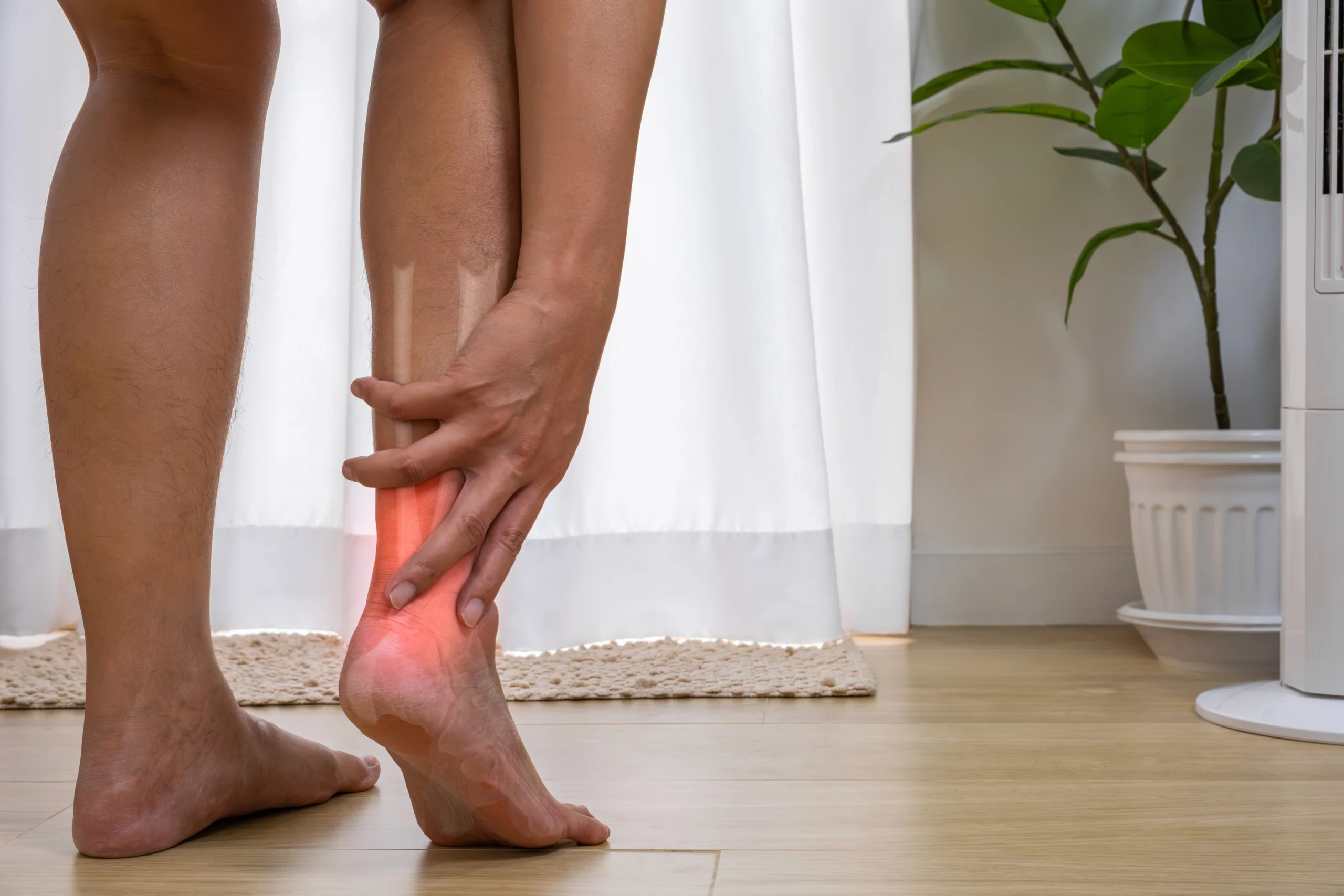
Make Sense of Persistent Achilles Pain with Dr Alan Cheung
Achilles tendonitis can feel deceptively manageable during exercise because discomfort may ease once the tendon warms up. Paying attention to soreness later in the day and stiffness the following morning can provide a fuller picture of how the tendon has responded to activity.
International Orthopaedic Clinic provides assessment and treatment for foot and ankle conditions, including Achilles tendon problems. Dr Alan Cheung has a special focus on foot and ankle surgery as well as sports and exercise medicine.
If Achilles pain persists or repeatedly worsens after activity, book an assessment to understand what may be contributing to the symptoms and how the tendon can be managed.
