

A Specialist's Guide to Preventing Common Sports Injuries

Dr Alan Cheung
Senior Consultant Orthopaedic Surgeon in Singapore
MBBS (London), MRCS (England), FRCS (Trauma and Orthopaedics, England), Diploma in Sport and Exercise Medicine (UK), Fellow of the European Board of Orthopaedics and Traumatology, American Academy of Orthopaedic Surgeons (AAOS)

The running culture in Singapore has seen a significant surge, with more individuals taking to park connectors for a brief jog and even taking part in major events like the Standard Chartered Singapore Marathon.
While this shift reflects a positive focus on cardiovascular health, it often fosters a push-through-the-pain mentality that overlooks the body's physical limits. This persistence can be counterproductive, as most running injuries are not sudden accidents but rather cumulative mechanical failures caused by repetitive, unmanaged stress.
Unlike a sudden fall or trip, overuse injuries develop silently when the repeated impact of high-mileage training overwhelms the body's natural ability to repair itself. By shifting your focus toward proactive prevention, you can learn to identify the subtle mechanical red flags that precede a clinical diagnosis, beginning with the very foundation of how you move.
The Foundation: Running Biomechanics and the Kinetic Chain
To prevent sports injuries, you must first understand that running is not an isolated movement of the legs, but a synchronised effort of the entire body. When this internal coordination is disrupted, minor mechanical flaws can quickly escalate into chronic pain.
The Ground-Up Effect
In the context of running, the body functions as a kinetic chain, where every joint and muscle group influences the next. This ground-up effect means that your foot strike pattern and ankle stability dictate how impact forces are distributed throughout your entire frame. For example, excessive inward rolling of the foot (overpronation) does not just strain the arch; it forces the shin to rotate inward, which can misalign the knee and eventually place uneven pressure on the hip and lower back.
Energy Absorption and Muscle Fatigue
The human body possesses a sophisticated natural suspension system designed to dampen the shock of each stride. This involves the rhythmic coordination of tendons, which act like springs, and muscles, which serve as active shock absorbers. However, as muscles fatigue during long-distance sessions, their ability to contract effectively diminishes. When this suspension fails, the raw impact forces—often three to four times your body weight—are transferred directly to the bones and cartilage, significantly increasing the risk of stress reactions and joint wear.
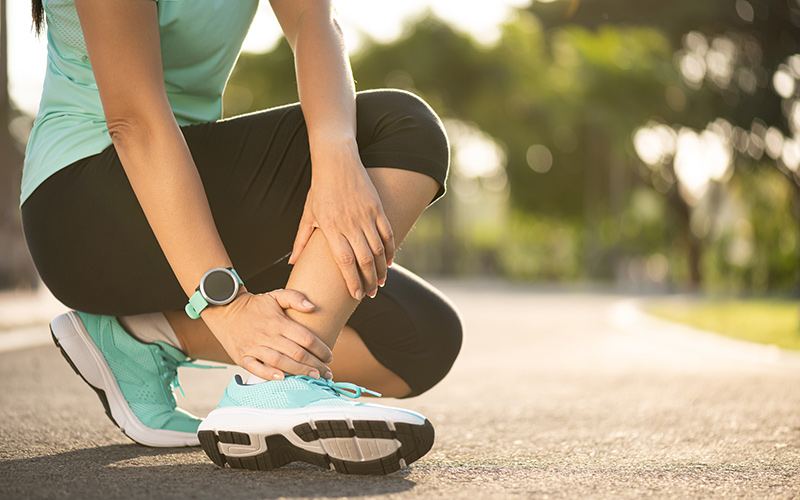
The Big Three Running Injuries: Knee, Ankle, and Foot
While running can affect various parts of the body, most clinical cases involve three primary areas where mechanical stress tends to concentrate. Understanding these common conditions is the first step in identifying whether your discomfort is a temporary ache or a developing injury.
Knee: Patellofemoral Pain Syndrome
This condition, often called runner's knee, occurs when the kneecap does not track properly within its groove due to muscle imbalances. It's frequently caused by a weak quad-to-hamstring ratio or poor lateral tracking, leading to persistent pain behind or around the patella. Strengthening the vastus medialis and improving hip stability can often correct this tracking issue and alleviate the pressure on the joint.
Ankle/Lower Leg: Achilles Tendonitis
The Achilles tendon acts as the body's primary lever for propulsion, but it has a specific threshold for how much load it can manage. Overloading the tendon through sudden incline training or rapid mileage increases can lead to micro-tears and chronic inflammation, a condition known as Achilles tendonitis. If left unaddressed, this inflammation can progress to tendonosis, where the tissue begins to thicken and lose its essential elastic properties.
Foot: Plantar Fasciitis
This injury involves inflammation of the thick band of tissue running across the bottom of the foot, a condition known as plantar fasciitis that often results from arch collapse or poor foot mechanics. It's most recognisable by sharp morning heel stiffness or pain that intensifies immediately after a period of rest. Over time, the constant pulling on the heel bone can lead to the formation of small bony protrusions known as heel spurs.
Proactive Prevention: Strengthening the Runner's Body
Building resilience against injury requires a shift from simply running more miles to intentionally preparing the body for the specific demands of impact. Implementing these clinical strategies ensures that your structural integrity keeps pace with your cardiovascular fitness.
- Evidence-Based Load Management: Recovery focuses on progressive overload rather than just rest. Instead of absolute inactivity—which leads to reversibility and weakens tissues—aim for the sweet spot where training stress builds capacity without damage. This ensures a gradual exposure to stress that builds resilience while avoiding sudden training spikes.
- Strength and Conditioning: Long-distance health depends on core-to-floor stability, with a specific focus on gluteal activation to maintain proper pelvic and joint alignment. Strengthening these key muscle groups ensures that your knees and ankles are not forced to compensate for a weak foundation during the later stages of a run.
- Proprioception Training: Incorporating neuromuscular drills improves your body's ability to sense its position in space, which is vital for maintaining balance on uneven pavement or trails. These exercises train your nervous system to react quickly to terrain changes, significantly reducing the risk of sudden ankle rolling or ligament sprains.
The Role of Equipment and Professional Gait Analysis
Selecting the right gear is about more than just comfort; it's a critical safeguard for your kinetic chain. By matching your footwear and form to your specific anatomy, you can mitigate the repetitive stress of long-distance running through these three key areas:
- Footwear Science: Understanding technical aspects like pronation control and heel-to-toe drop is more critical for injury prevention than aesthetics. Selecting a shoe that complements your natural foot mechanics helps distribute impact forces evenly, protecting the joints of the lower limb.
- The Lifespan of Gear: Running on shoes with dead foam significantly increases injury risk because the compressed midsole can no longer dampen the shock of each stride. Most trainers lose their structural integrity after 500 to 800 kilometres, forcing your bones and tendons to absorb the raw impact.
- Gait Analysis: A clinical gait assessment identifies subtle mechanical inefficiencies and imbalances in your stride before they manifest as physical pain. Specialists use motion tracking to pinpoint exactly where your kinetic chain is failing, allowing for precise corrections to your form or footwear.
Recognising the Red Flags: When to Seek Medical Advice
While minor aches are a common part of training, certain symptoms indicate structural damage that requires more than just rest. Recognising these clinical red flags early can prevent a minor strain from evolving into a life-defining injury:
- The Warm-up Test: Pain that disappears during the run but returns with greater intensity afterward is a sign of chronic inflammation. This cycle suggests the tissue is struggling to cope with the load and is at risk of rupture.
- Localised Bone Tenderness: Sharp, pinpoint pain that is sensitive to the touch often signals a bone stress reaction or fracture. Unlike diffuse muscle soreness, this localised tenderness indicates the bone is failing to remodel under impact.
- Persistent Neurological Signs: Numbness, tingling, or burning sensations often point toward nerve entrapment or spinal compression. These symptoms require an immediate professional assessment to prevent potential long-term nerve damage.
- Asymmetrical Pain: Discomfort strictly localised to one side suggests a significant mechanical imbalance or unilateral injury. Limping to protect one side often leads to secondary compensatory injuries in previously healthy joints.
Take the Lead in Your Running Journey
Achieving long-term athletic success in Singapore's vibrant running scene requires a balance between ambition and physiological awareness. By understanding your biomechanics, respecting the limits of your equipment, and listening to clinical red flags, you can transform your training from a cycle of repetitive stress into a sustainable pursuit of health.
At International Orthopaedic Clinic, we're committed to helping athletes and fitness enthusiasts of all levels navigate their recovery and performance goals with precision. Dr Alan Cheung works closely with his dedicated team to specialise in identifying the root mechanical causes of pain, providing tailored solutions to support your longevity on the road.
If you're experiencing persistent discomfort or wish to optimise your running gait, get in touch with us today to book a comprehensive assessment.
Frequently Asked Questions (FAQs) About Common Runners' Injuries
Is it better to be a heel striker or a forefoot runner?
Neither strike is superior; they simply distribute impact differently. Heel striking places more stress on the knees and hips, while forefoot striking shifts that load to the calves and Achilles tendons. Unless you are experiencing recurring injuries, the best strike is your natural one, as forced changes often lead to new mechanical issues.
How can I tell the difference between good soreness and bad pain?
Good soreness, known as delayed onset muscle soreness (DOMS), typically feels like a dull ache that improves once you start moving and resolves within 48 hours. Meanwhile, bad pain is usually sharp, localised to one side, or persists even after a warm-up, signalling a potential injury that requires professional assessment.
Are custom orthotics necessary for every runner?
Not every runner requires custom orthotics, as many can perform well with over-the-counter inserts or the correct category of running shoe. However, they are highly beneficial for those with significant structural misalignments or recurrent injuries that haven't responded to standard footwear changes.
