


Medically Reviewed by: Dr Alan Cheung
Senior Consultant Orthopaedic Surgeon in Singapore
MBBS (London), MRCS (England), FRCS (Trauma and Orthopaedics, England), Diploma in Sport and Exercise Medicine (UK), Fellow of the European Board of Orthopaedics and Traumatology, American Academy of Orthopaedic Surgeons (AAOS)
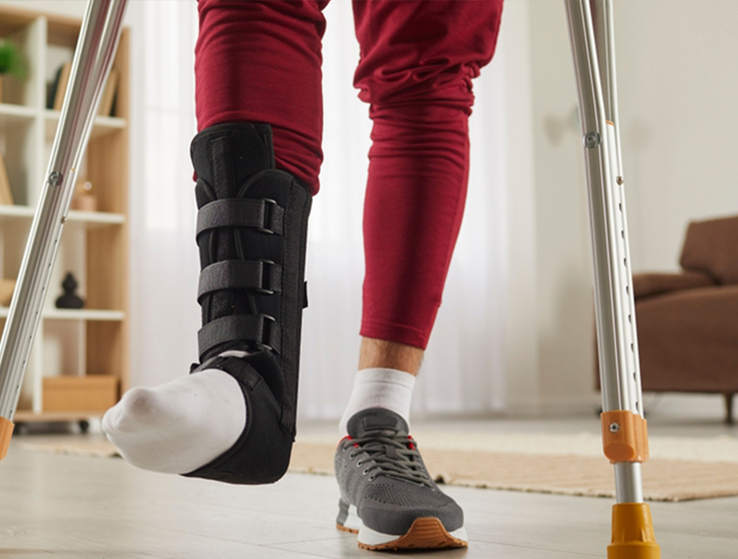
Leg fractures can involve various bones in the leg, including the femur (thighbone), patella (kneecap), tibia (shinbone), and fibula (smaller bone alongside the shinbone). People with a broken leg should receive prompt diagnosis and treatment as soon as possible to ensure proper healing and prevent further complications.
Understanding the Causes of Leg Fractures
Leg fractures, or a broken leg, can arise from various factors. Here are three main causes:
- Trauma : This is the most common cause, encompassing falls, motor vehicle accidents, sports injuries, or direct blows to the leg. The force from such impacts can fracture the femur (thighbone), tibia (shinbone), or fibula (smaller bone next to the shinbone).
- Overuse : Repetitive stress on the leg can lead to stress fractures. These tiny cracks typically develop in the shinbone (tibia) or other bones that bear weight during activities like running or jumping.
- Osteoporosis : This condition weakens bones and makes them more susceptible to fractures. Even a minor fall or bump can cause a broken leg in someone with osteoporosis.
Signs and Symptoms of a Broken Leg
Here are some signs and symptoms to watch for:
- Severe Pain: This is the most common symptom, often described as sharp, throbbing, or intense pain in the leg.
- Swelling and Bruising: The injured area will swell and bruise due to blood vessel damage.
- Deformity: The leg may appear visibly broken, bent at an unnatural angle, or look misaligned compared to the other leg.
- Limited Mobility: You may find it difficult to move or put weight on the injured leg.
- Difficulty Walking or Inability to Walk: In some cases, a broken leg can make walking impossible or extremely painful.
Diagnosing a Broken Leg
The orthopaedic specialist will carefully examine the injured leg, checking for pain points, swelling, bruising, and any visible deformity. They will also assess your ability to move the leg and bear weight on it.
If a fracture is suspected, imaging tests will be done:
- X-rays: This is the most common imaging test for diagnosing fractures. An X-ray provides a clear picture of the bones, allowing the doctor to pinpoint the location and type of fracture.
- MRI Scans: In some cases, additional imaging tests may be required, such as MRI scans. These offer a better view of soft tissues like ligaments and cartilage.
- CT Scans: Similar to MRI scans, CT scans may be required for more detailed images. These provide detailed 3D images of the bone, which is especially useful for complex fractures.
Types of Leg Fractures
Leg fractures can be categorised based on the severity and characteristics of the break.
Treatment Options for a Broken Leg
After a leg fracture diagnosis, treatment focuses on pain management, proper bone alignment, and promoting healing.
- Medication: Over-the-counter pain relievers are often recommended to help reduce pain and inflammation.
- Immobilisation: A splint, brace or cast is often used to immobilise stable fractures, allowing them to heal properly.
- Reduction: In cases of displaced or unstable fractures, a reduction procedure may be performed to move the pieces of bone back into their proper positions before applying a splint.
- Surgery: Internal fixation devices, such as rods, plates, or screws, are surgically implanted to maintain the proper position of the bones during healing. This is often used for:
- Multiple fractures
- An unstable or displaced fracture
- Loose bone fragments that could enter a joint
- Damage to the surrounding ligaments
- Fracture that extends into a joint
- Fracture caused by a crushing accident
Recovery From a Broken Leg
As you recover, the initial pain and swelling can be managed by medication, elevation, and possibly cold therapy. Regular follow-up visits are key to monitor progress and adjust treatment as needed. Rehabilitation and physiotherapy usually last for several weeks or months and focus on improving muscle strength, flexibility and overall function.
If you are experiencing pain or suspect a leg fracture, do not wait to seek medical attention. Early diagnosis and treatment are key to a successful recovery.
